
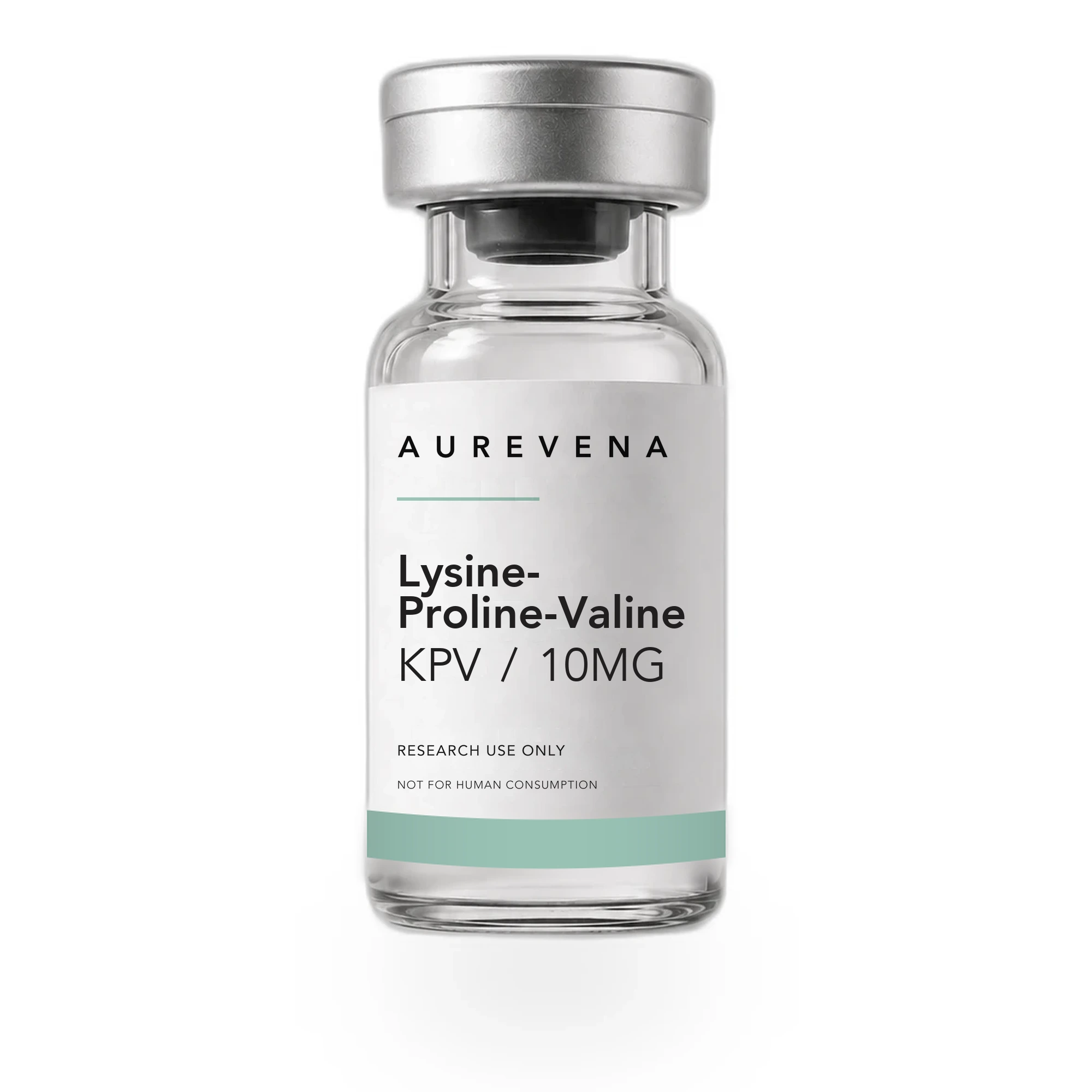
Lysine-Proline-Valine (KPV) (10mg)
$48.99
KPV is the C-terminal tripeptide of alpha-MSH studied in inflammation-modulation and melanocortin-signaling research models. Lyophilized powder for laboratory use only.
We Accept:

Fast Fulfillment
Ships with 1-2 business days
Research Guarantee
Damaged on arrival. Replaced
$150 + Free Shipping
Fast & Tracked
U.S. Third-Party Tested
COA available for each product
Independently Verified. Every Batch
Every Aurevena product is sent to an independent, accredited third-party laboratory before it is offered for sale. Certificates of Analysis confirm compound identity, purity percentage, and the absence of harmful contaminants.
COAs are published by lot number so researchers can verify the exact product they receive. We do not sell any product that does not clear our purity threshold.
- Compound identity (HPLC / MS verification)
- Purity percentage (target ≥ 99%)
- Absence of heavy metals
- Lot-number traceability
CERTIFICATE OF ANALYSIS
Lysine-Proline-Valine (KPV) (10mg)
10mg
PURITY
99.70%%
ASSAY
10.7mg
IDENTITY
Confirmed
HEAVY METALS
<10 ppb
TAMC
0 CFU
TYMC
0 CFU
BATCH/LOT
20251214L03KPVS10
TESTING DATE
20260321
REVIEWING LAB
Analytical Formulations, Inc.
- Description
- Compound Info
- Research Overview
Description
KPV (lysine-proline-valine) is the C-terminal tripeptide fragment of alpha-melanocyte-stimulating hormone (α-MSH) and a tool compound in inflammation and immune-signaling research. Laboratory investigators study KPV for its anti-inflammatory signaling, modulation of NF-κB and pro-inflammatory cytokine pathways, and melanocortin-related mechanisms in vitro and in preclinical systems. It is examined in gut-epithelial, dermal, and immune-cell models for its influence on inflammatory-response regulation. Supplied for in-vitro and laboratory research only — not for human or veterinary use.
| Compound Class | Synthetic tripeptide (C-terminal fragment of alpha-melanocyte-stimulating hormone) |
|---|---|
| CAS Number | 67727-97-3 |
| Molecular Formula | C16H30N4O4 |
| Molecular Weight | 342.43 g/mol |
| Sequence | Lys-Pro-Val |
| Appearance | White to off-white lyophilized powder |
Research Overview
Used in in vitro and preclinical research relating to short peptide chemistry and melanocortin-related peptide fragment studies.
Storage
Store unreconstituted vials refrigerated at 2-8°C and long-term at -20°C; once reconstituted, store at 2-8°C and use within 30 days.
IMPORTANT RESEARCH NOTICE
Not for human consumption.
This product is sold exclusively for research and educational purposes. It is not intended to diagnose, treat, cure, or prevent any disease. All clinical trial data and research findings presented on this page are sourced from peer-reviewed journals and official publications. They are provided for educational reference only and should not be interpreted as medical advice or product claims. By purchasing this product, you confirm that you are a qualified researcher and will use it in accordance with all applicable laws and regulations.
Frequently Asked Questions
How should I store my peptides?
Lyophilized (powder) peptides should be stored at -20°C for long-term storage or 2-8°C (refrigerator) for short-term. Always protect from light and avoid repeated freeze-thaw cycles.
What is your return policy?
We offer damage protection on every order. If your product arrives damaged in transit, contact us with photos for a one-time replacement. All claims require photo evidence and are subject to review. One replacement per customer per order. Reconstituted products are not eligible. We do not offer refunds for change of mind or misuse.
Are your peptides third-party tested?
Yes, every batch is tested by independent, accredited U.S. laboratories for purity verification and Mass Spectrometry for identity confirmation. Test results are published on each product page as Certificates of Analysis (CoA).
How long does shipping take?
Orders are processed within 1-2 business days. Standard shipping typically arrives within 3-5 business days from fulfillment. Express and overnight options are available at checkout. Every order includes free shipment protection.
Do you ship internationally?
Currently, we ship within the United States only. We're working on expanding our shipping capabilities to serve researchers worldwide.
Can I modify or cancel my order?
Orders can be modified or canceled within 5 min of placement. After this window, orders enter processing and cannot be changed. Contact hello@aurevenaresearch.com immediately if you need to make changes.
What should I do if my item arrives damaged?
We offer damage protection on every order. If your product arrives damaged in transit, contact us with photos for a one-time replacement. All claims require photo evidence and are subject to review. One replacement per customer per order. Reconstituted products are not eligible. We do not offer refunds for change of mind or misuse.
Frequently Researched Together
Recently Viewed
Sources & References
Peer-reviewed research
IMMUNE RESEARCHLysine-Proline-Valine (KPV) (10mg)3 SOURCES
Inflamm Bowel Dis
Melanocortin-derived tripeptide KPV has anti-inflammatory potential in murine models of inflammatory bowel disease
VOL 14(3):324-331 · PMID 18092346 · DOI 10.1002/ibd.20334
Kannengiesser K, Maaser C, Heidemann J, et al. (Luger TA) · 2008
J Invest Dermatol
alpha-Melanocyte-stimulating hormone, MSH 11-13 KPV and adrenocorticotropic hormone signalling in human keratinocyte cells
VOL 122(4):1010-9 · PMID 15102092 · DOI 10.1111/j.0022-202X.2004.22404.x
Elliott RJ, Szabo M, Wagner MJ, et al. · 2004
Research FAQ
Compound and research-use information
What is KPV?
KPV is a synthetic tripeptide (lysine-proline-valine) corresponding to the C-terminal fragment of alpha-melanocyte-stimulating hormone (alpha-MSH). It is supplied for laboratory research use.
What is KPV studied for in the research setting?
KPV is studied in vitro and in preclinical models for research into anti-inflammatory signaling and melanocortin-pathway-related immune modulation. It is used as a reference peptide in immunology research.
What form is Aurevena's KPV supplied in?
KPV is supplied as a lyophilized (freeze-dried) powder. Every batch is tested by independent, accredited U.S. laboratories for purity and identity, with the Certificate of Analysis published on this product page. Store lyophilized peptide cold and protected from light, and avoid repeated freeze-thaw cycles.
Is KPV intended for human use?
No. KPV is sold by Aurevena strictly for laboratory and research use only. It is not a drug, dietary supplement, cosmetic, or medical device, and is not intended for human or veterinary use, consumption, or for the diagnosis, treatment, cure, or prevention of any disease.
